1. Push Reel Mowers
Eco-friendly, great for small gardens, and gentle on cool-season grasses.

In Melbourne, where the seasons can change in a single day, maintaining a healthy and vibrant lawn is both an art and a science. Whether you’re a seasoned gardener or a weekend warrior, mowing your lawn correctly is one of the most crucial steps to ensure your garden looks its best year-round.
From understanding your grass type to timing your mowing sessions with Melbourne’s unpredictable weather, this guide provides everything you need to know to achieve a lush and beautiful lawn in this iconic Australian city.
Mowing isn’t just about keeping your lawn neat. It’s essential for:
Done improperly, however, mowing can damage your grass, invite pests, and increase water consumption.
Melbourne lawns commonly feature cool-season grasses such as:
In warmer northern suburbs or newer developments, you may also find:
Knowing your grass type determines:
Never cut more than one-third of the grass blade in a single mow. Removing too much stresses the plant and reduces its photosynthetic ability
Wet grass clumps, dulls mower blades, and can create an uneven cut. Late morning or early afternoon is ideal after the dew has dried.
Dull blades tear grass rather than slicing it, causing brown tips and inviting disease. Sharpen your mower blades at least once per season.
Avoid mowing in the same direction every time. Rotating patterns prevents soil compaction and keeps the grass growing upright.
Leaving short clippings on your lawn can return nutrients to the soil and improve moisture retention—especially beneficial in Melbourne’s dry summer months.
| Season | Mowing Frequency |
|---|---|
| Spring | Weekly |
| Summer | Every 1–2 weeks |
| Autumn | Every 2–3 weeks |
| Winter | Monthly or as needed |
It’s best to water the lawn the day before mowing, not immediately before. Mowing dry grass ensures a clean cut. After mowing, wait a few hours before watering to avoid potential disease.
Depending on your lawn size and budget, you may choose from:
Eco-friendly, great for small gardens, and gentle on cool-season grasses.
Low maintenance, quiet, and ideal for mid-sized lawns.
Powerful and durable—best for larger lawns or uneven terrain.
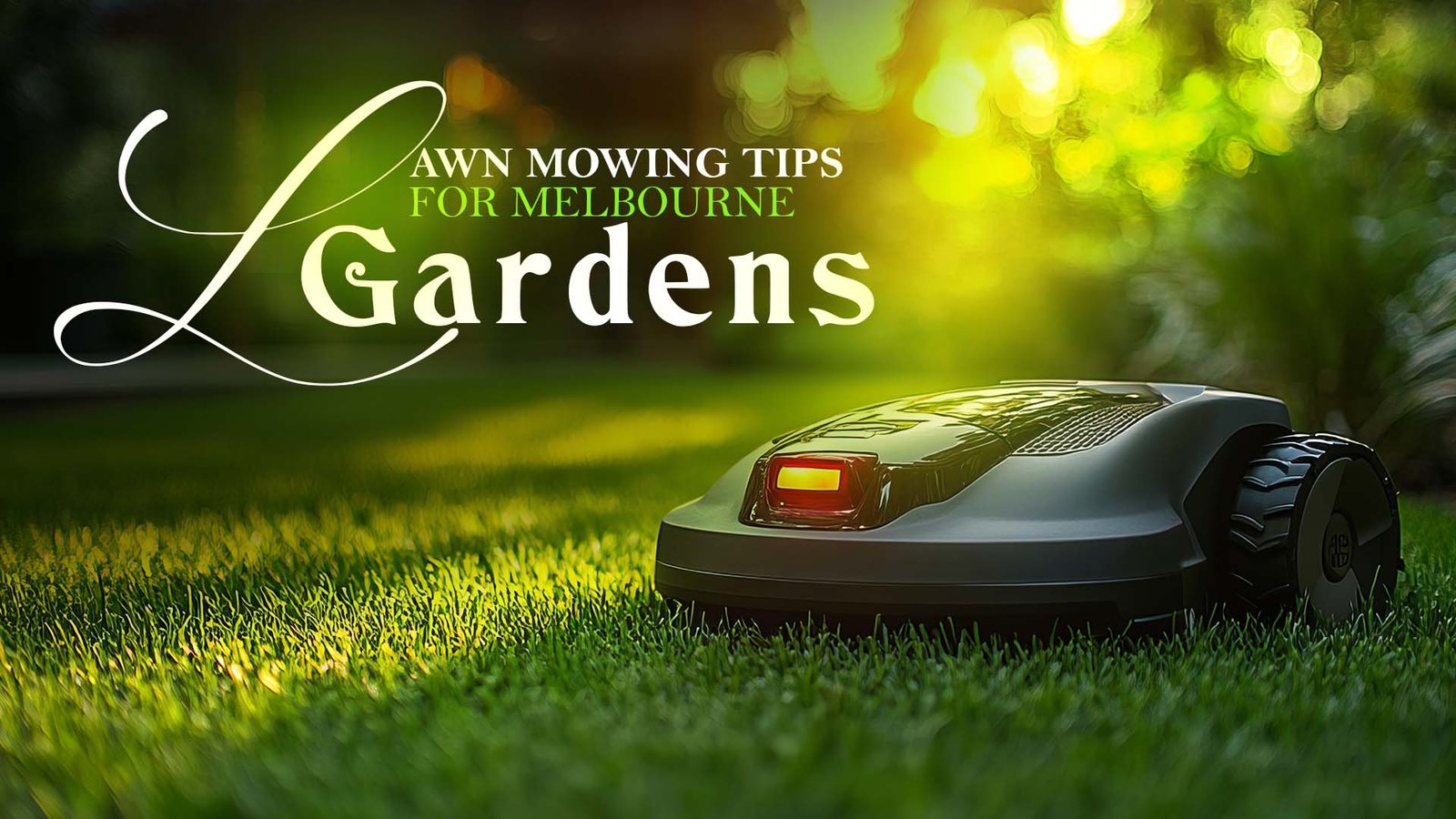
A growing trend in Melbourne—automated, quiet, and efficient for tech-savvy gardeners.
Edging gives your lawn a polished look. For best results:
To support healthy mowing, consider:
Given water restrictions and environmental concerns, consider:
These options reduce your water bill and support Melbourne’s sustainability efforts.
Depending on your lawn size and budget, you may choose from:
For cool-season grasses, aim for 5–7 cm. In hot summers, keep grass slightly longer to shade the soil.
Avoid it. Mowing wet grass leads to clumping, uneven cuts, and can damage your lawn and mower.
Ideally once every 20–25 mowing hours or once per season.
Mow before fertilising to ensure the nutrients reach the soil.
Only if the grass is actively growing. Most cool-season grasses go dormant in winter.