- By Admin
- 21 March, 2026
- 6 min Read
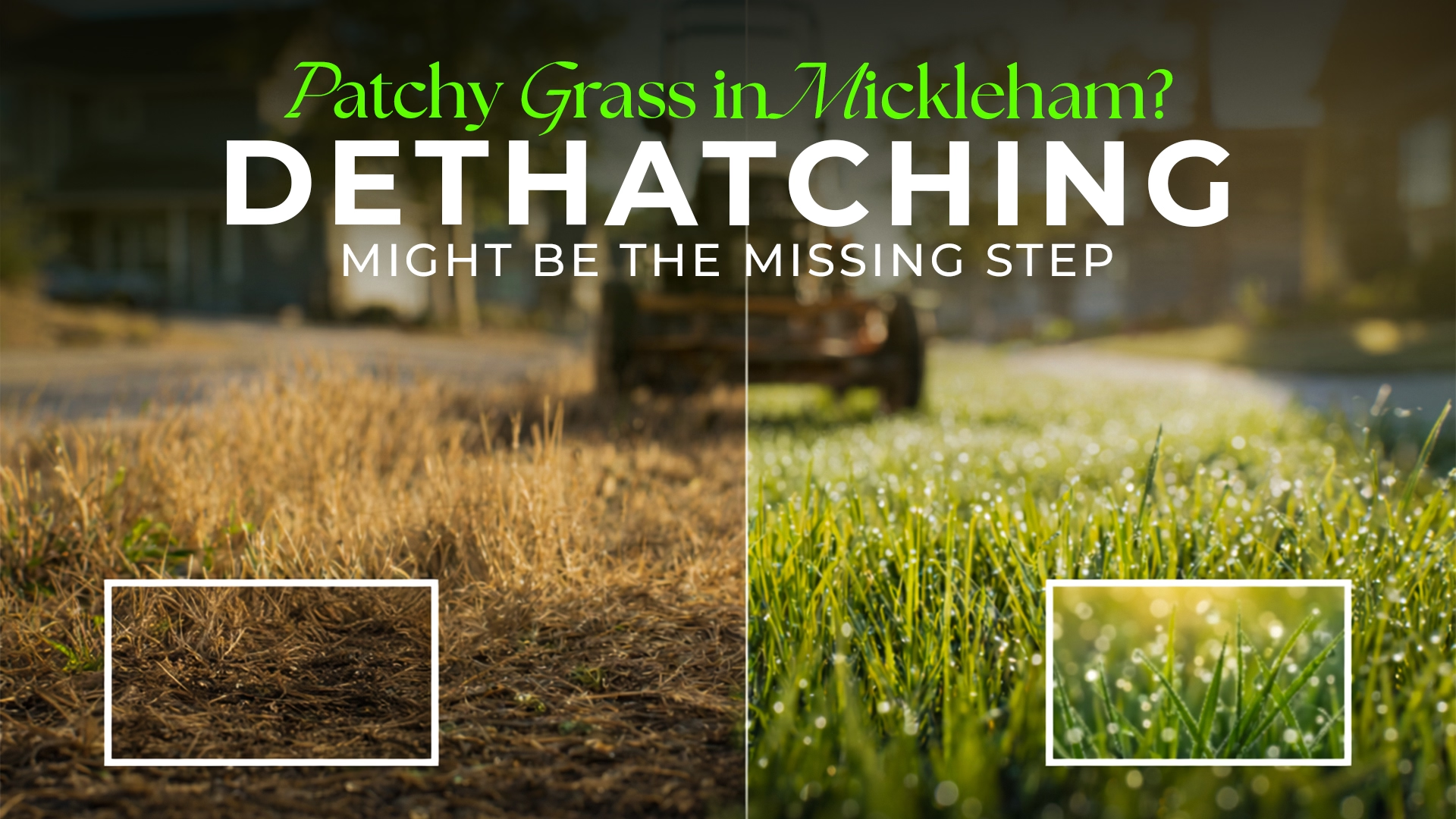
Patchy Grass in Mickleham? Dethatching Might Be the Missing Step
Patchy grass in Mickleham is rarely just a watering issue. In many local lawns, the real constraint is what sits between the soil and the grass. A dense thatch layer builds up over time and quietly blocks the basics your lawn depends on.
If your lawn looks uneven even after regular care, a targeted lawn dethatching service Mickleham is often the missing step that restores consistency.
Why Patchy Lawns Are Common in Mickleham
Mickleham lawns face a mix of clay-heavy soil, new estate construction, and irregular maintenance patterns. These factors create ideal conditions for thatch build-up.
Key local triggers include:
- Rapid grass growth in spring followed by dry stress in summer
- Clay soil reducing natural decomposition of organic matter
- Frequent mowing without removal of clippings
- Irrigation that keeps the surface moist but not the root zone
Over time, this leads to a compacted organic layer that separates the grass from the soil.
What Actually Happens When Thatch Builds Up
Thatch is not just dead grass. It is a compressed layer of stems, roots, and debris that changes how your lawn behaves.
Once it crosses about 15 mm, it starts to:
- Block water from reaching the root zone
- Trap moisture at the surface, increasing disease risk
- Limit oxygen exchange in the soil
- Prevent fertiliser from penetrating effectively
This is why lawns can look dry and overwatered at the same time. The roots are still starved.
This is where lawn dethatching becomes a corrective process, not just maintenance.
Learn How Aeration Supports Lawn Health
Aeration improves soil condition by creating small openings that allow air, water, and nutrients to reach the roots. It is useful when the soil feels hard or drainage is poor.
How Lawn Dethatching Fixes Patchy Growth
A proper lawn dethatching service Mickleham removes the barrier layer and resets the lawn's surface.
The immediate technical improvements are:
- Direct soil exposure for water and nutrients
- Improved root respiration due to better airflow
- Activation of dormant growth points
- More uniform soil temperature across the lawn
This creates conditions where new growth can spread into previously weak areas.
How to Confirm Your Lawn Needs Dethatching
Instead of guessing, use simple field checks.
- Dig a small section of turf and measure the thatch layer. If it is more than 10 to 15 mm, dethatching is recommended
- Run a hose for 5 minutes. If water pools or runs off, the surface is blocked
- Press your foot into the lawn. A spongy feel usually indicates heavy thatch
- Check root depth. Shallow roots combined with patchy grass signal poor soil access
These indicators are more reliable than visual appearance alone.
Dethatching vs Aeration in Real Scenarios
In Mickleham, lawns often need both, but in the correct order.
- If the surface is blocked, dethatching comes first
- If the soil is hard underneath, aeration follows
Doing aeration without removing thatch limits its effectiveness because the holes do not properly connect to the soil system.
Best Timing for Lawn Dethatching Victoria Australia
Timing should align with active recovery phases.
In lawn dethatching Victoria Australia conditions:
- Early spring supports fast regrowth after removal
- Early autumn allows recovery before winter dormancy
Avoid peak summer in Mickleham. High temperatures slow recovery and increase stress on exposed roots.
Compare Dethatching and Aeration for Better Results
Dethatching removes the surface layer that blocks water and nutrients, while aeration works deeper in the soil. Both serve different purposes and are often used together for healthier lawns.
What Most DIY Dethatching Gets Wrong
DIY dethatching often removes too little or too much.
Common issues include:
- Shallow passes that leave the problem layer intact
- Aggressive raking that damages healthy crowns
- Uneven coverage leading to inconsistent regrowth
- No follow-up care such as fertilising or watering adjustment
This is why many lawns remain patchy even after effort.
Sky Nature Expert Solution for Lawn Dethatching
A structured approach is what separates visible improvement from temporary results.
Sky Nature delivers lawn dethatching service Mickleham with a focus on correction, not just cleanup.
Their process includes:
- Measuring thatch depth and lawn condition
- Selecting the right dethatching intensity
- Even removal across the entire lawn area
- Post-service guidance for recovery and growth
This ensures the lawn does not just look cleaner but actually grows back stronger. If your lawn in Mickleham is still uneven after regular care, book a professional lawn dethatching service Mickleham with Sky Nature and fix the root cause, not just the surface.
What Results to Expect After Dethatching
Recovery is progressive but measurable.
Within 2 to 4 weeks:
- Water starts penetrating evenly
- New shoots appear in previously bare patches
- Grass colour becomes more consistent
Within 6 to 8 weeks:
- Lawn density improves across the full area
- Patchiness reduces significantly
- Maintenance becomes easier and more predictable